
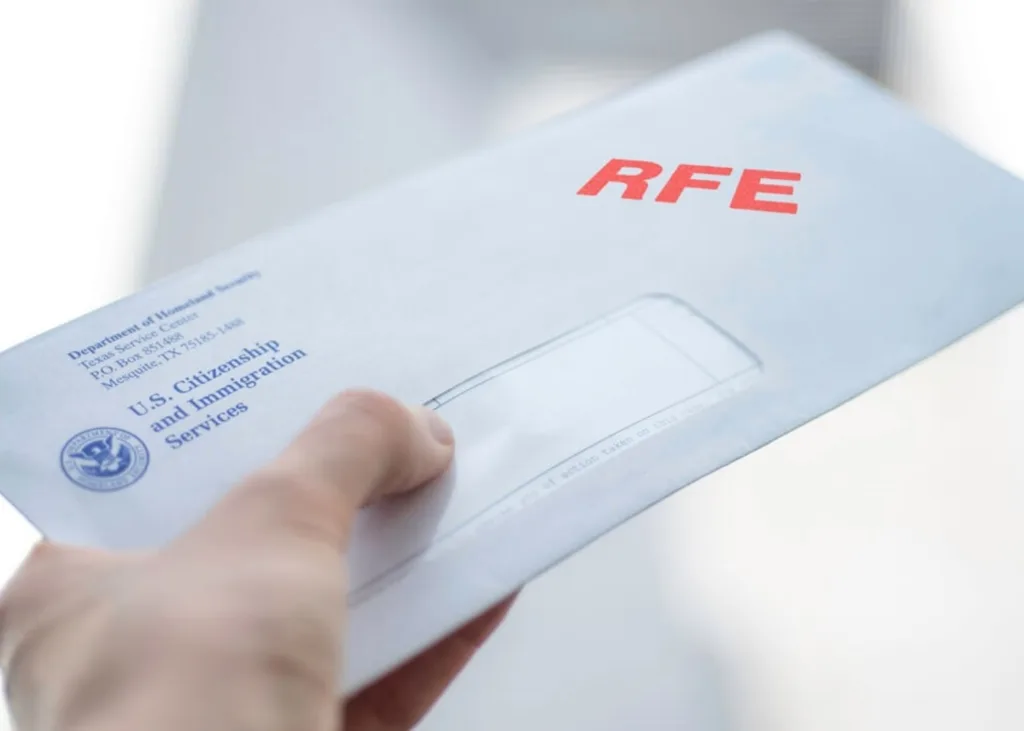
Receiving a Request for Evidence (RFE) from USCIS can be unsettling. For many people, it’s the moment when confidence turns into worry. Questions start to come up quickly: Did I do something wrong? Is my case going to be denied? What happens next?
An RFE does not mean your case has failed. It means USCIS needs more information before it can make a decision. How you respond and how carefully that response is prepared, can have a real impact on the outcome of your case.
Why does USCIS issue an RFE?
USCIS issues an RFE when the initial evidence submitted does not fully address one or more requirements of the application. This can happen even in strong cases. Sometimes documents are missing, sometimes evidence is unclear, and in other situations USCIS wants clarification about eligibility or credibility.
RFEs are especially common in immigration cases involving marriage-based green cards, asylum, waivers, or situations where the applicant has a more complex immigration history.
What happens once an RFE is issued?
When USCIS sends an RFE, the notice will explain exactly what information or documents are being requested and will include a strict deadline for response. In most cases, applicants have between 30 and 90 days to submit their response.
It is important to understand that USCIS usually does not grant extensions. If the response is late, incomplete, or does not directly address the request, the application may be denied based on the evidence already on file.
This is why RFEs should be reviewed carefully before taking any action.
Common reasons people receive an RFE
Many RFEs relate to evidence that USCIS considers insufficient. In marriage-based cases, this often involves proof that the relationship is genuine. In other cases, USCIS may request additional financial documentation, clarification of past immigration entries, or more detailed explanations regarding eligibility.
Each RFE is different, and responding with generic or unrelated documents can weaken a case rather than help it.
What are the risks of an improper RFE response?
Responding incorrectly to an RFE can lead to serious consequences. A denial may require refiling the case, paying new filing fees, or starting the process again from the beginning. In more sensitive situations, an incorrect response can raise additional questions or trigger further review.
Because USCIS bases its decision largely on the written record, the RFE response is often one of the most important stages of the entire process.
How an immigration lawyer can help with an RFE
An experienced immigration lawyer can review the RFE notice, identify the underlying concerns, and help prepare a response that directly addresses USCIS requirements. This may involve organizing stronger evidence, preparing legal explanations, or clarifying inconsistencies in the record.
Legal guidance is especially valuable when the RFE involves credibility issues, marriage validity, waivers, or prior immigration complications. In these cases, how the response is structured can matter just as much as the documents themselves.
When should you seek legal advice?
If you receive an RFE and are unsure how to respond, it is often best to seek legal advice as early as possible. Many people wait until the deadline approaches, which limits available options and increases stress.
Speaking with an immigration attorney early can help you understand the request, avoid unnecessary mistakes, and submit a clear and timely response.
An RFE is not the end of your case, but it is a critical moment. A thoughtful and well-prepared response can keep your application moving forward and reduce the risk of denial.
If you have received an RFE and want to make sure your response is handled correctly, consulting with an immigration lawyer can help protect your case and give you clarity during the process.
👉 Contact our office to review your RFE and discuss your legal options with an experienced immigration attorney.